

Car Dashboard Warning Lights Explained: What They Mean and What You Should Do

Modern vehicles are equipped with dozens of sensors designed to protect both the car and its occupants. When something is not working correctly, the vehicle communicates through dashboard warning lights. The problem is that many drivers do not know what these lights actually mean—or how urgent they are.
This guide explains the most common dashboard warning lights, what causes them, and when you should stop driving and seek professional diagnostics.
Understanding Warning Light Colours
Before looking at individual symbols, it is important to understand the colour system used by most vehicles:
- Red: Stop immediately. Continuing to drive may cause serious damage or safety risks.
- Amber / Yellow: Caution. The vehicle can usually be driven, but the issue requires attention soon.
- Green / Blue: Informational. A system is active and working as intended.
Red Warning Lights (Stop Immediately)
Engine Oil Pressure Warning
Symbol: Oil can
Meaning: Low oil pressure or oil circulation failure
What to do: Stop the engine immediately. Continuing to drive may cause severe engine damage.

Brake System Warning
Symbol: Circle with an exclamation mark or “P”
Meaning: Low brake fluid, brake system fault, or parking brake engaged
What to do: If braking feels abnormal, stop driving and have the braking system inspected urgently.
Engine Temperature Warning
Symbol: Thermometer in liquid
Meaning: Engine overheating
What to do: Stop safely and switch off the engine. Driving further may cause serious engine damage.
Amber / Yellow Warning Lights (Attention Needed)
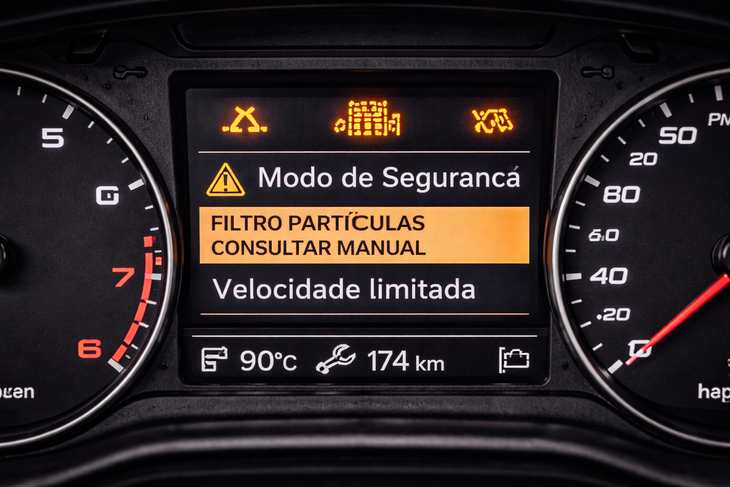
Check Engine Light
Symbol: Engine outline
Meaning: Possible engine, emissions, or sensor fault
The vehicle can usually still be driven, but performance and fuel efficiency may be affected. A diagnostic check should be booked as soon as possible.

ABS Warning Light
Symbol: ABS in a circle
Meaning: Anti-lock braking system malfunction
Normal braking still works, but the ABS safety function is disabled.
Tyre Pressure Monitoring System (TPMS)
Symbol: Flat tyre with an exclamation mark
Meaning: One or more tyres have incorrect pressure
Check tyre pressures and inspect for punctures as soon as possible.
Battery / Charging System Warning
Symbol: Battery icon
Meaning: Battery not charging correctly or alternator fault
If ignored, the vehicle may stop once the battery is fully discharged.
Green and Blue Lights (Informational)
These lights indicate that a system is active, not faulty:
- Headlights and high beams
- Turn indicators
- Cruise control
- Driving assistance systems
No action is required unless a light behaves unexpectedly.
Can You Ignore a Warning Light?
Ignoring warning lights often leads to higher repair costs, unexpected breakdowns, safety risks, and inspection failures. What begins as a simple warning can quickly develop into a major mechanical issue.
Why Professional Diagnostics Matter
Modern vehicles rely on complex electronic systems. A warning light alone does not identify the root cause. Professional diagnostics allow technicians to read fault codes, locate the problem accurately, and avoid unnecessary part replacement.
Final Advice
If your dashboard warning lights come on and you are unsure what they mean, do not guess. Early diagnosis is almost always safer and more cost-effective than waiting.
A quick diagnostic check can prevent breakdowns, protect critical systems, and give you peace of mind—especially before long journeys.
Book a Diagnostic Check